
How to Become a Pilates Instructor (What No One Tells You)
Pilates has a way of pulling people in. What starts as a workout often turns into curiosity — about movement, anatomy, teaching, and eventually, whether this could become more than a practice.
If you’re thinking about becoming a Pilates instructor, this guide walks through what the process actually looks like — beyond the highlight reels and certification ads.
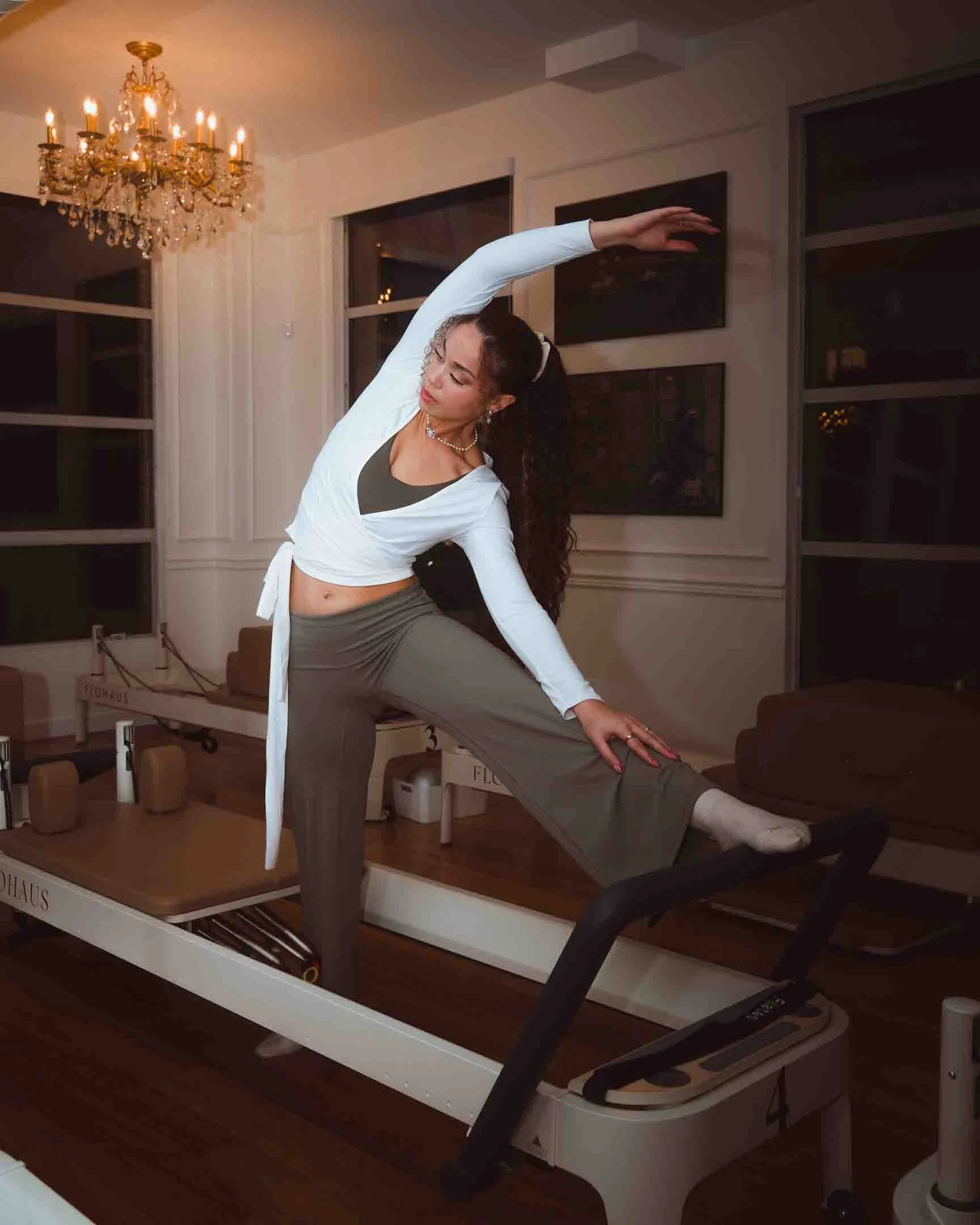
Christinna performs a Pilates stretch, moving with fluidity and control as the body lengthens, folds, and articulates through space.
1. Start by Practicing Pilates — A Lot
“The best instructors are often the most observant — the ones who understand how movement feels, not just how it looks.”
Across studios and training environments I’ve been part of, this is where the real foundation is built — long before certification ever begins.
Before thinking about training programs or certifications, spend real time practicing. Not just casually, but intentionally. Take classes with different instructors. Notice cueing styles, class flow, and how your body responds over time.
You don’t need to be the strongest or most advanced person in the room. The best instructors are often the most observant — the ones who understand how movement feels, not just how it looks.
If reformer Pilates is what excites you most, prioritize consistent reformer practice early on.
2. Decide What Style of Pilates You Want to Teach
This step matters more than most people realize.
Some instructors are drawn to classical Pilates, rooted in traditional sequencing and original apparatus work. Others resonate with contemporary or reformer-based Pilates, which blends classical principles with modern biomechanics and athletic movement.
Neither path is better — but they lead to very different teaching environments.
Ask yourself:
Do I want to teach in boutique studios?
Do I enjoy contemporary strength-based movement?
Am I interested in mat, reformer, or both?
Your answers will help narrow training options later.
3. Choose a Training Program That Fits Your Life
What matters most isn’t the format itself, but whether it allows you to stay consistent, curious, and supported throughout the process.
Pilates teacher training typically falls into three formats:
Online training
Flexible and often more affordable. Best for self-motivated learners, but limited hands-on feedback.
In-person training
Structured, immersive, and hands-on. Ideal if you learn best through physical correction and community.
Immersion programs
Intensive training blocks over days or weeks. Efficient but demanding — financially and physically.
There’s no single “best” option. The right program is the one you can complete fully, without burning out halfway through.
4. Understand the Time & Cost (Honestly)
This is where expectations need to be realistic.
Most Pilates instructor certifications:
Take 3–12 months to complete
Cost anywhere from $1,000 to $10,000+
Require observation hours, practice teaching, and a final assessment
A higher price doesn’t automatically mean better quality. Look for programs with strong mentorship, clear structure, and graduates who are actively teaching.
5. Passing the Test Isn’t the End — It’s the Beginning
Certification qualifies you to teach — it doesn’t make you confident overnight.
Your first months teaching will involve:
Learning to cue clearly
Managing different bodies in one room
Building class presence
Making mistakes (everyone does)
Confidence comes from repetition, not perfection.
6. Finding Your First Teaching Opportunities
New instructors often start by:
Teaching at local studios
Subbing classes
Assisting senior instructors
Offering private or small group sessions
Studios look for instructors who are reliable, curious, and open to feedback — not just technically skilled.
7. Keep Learning (This Is What Makes Great Instructors)
The most respected instructors never stop learning. They continue studying anatomy, movement, and teaching methodology long after certification.
Workshops, mentorship, and continuing education keep your teaching fresh — and prevent burnout.
FAQs
How much do Pilates instructors make?
Earnings vary widely by city, studio type, and experience. In North America, instructors typically earn $25–$70 per class, with higher rates for private sessions.
How long does it take to become a Pilates instructor?
Anywhere from a few months to a year, depending on the program and your availability.
Do I need to be advanced to teach Pilates?
No. You need understanding, consistency, and communication skills — not extreme flexibility or strength.
Over time, one thing becomes clear: great instructors aren’t defined by how fast they certify, but by how deeply they continue to learn.
At FLOHAUS, we value instructors who lead with curiosity, precision, and care — instructors who see Pilates as a lifelong practice, not just a certification.
