
Why Pilates Builds Strength Differently Than the Gym
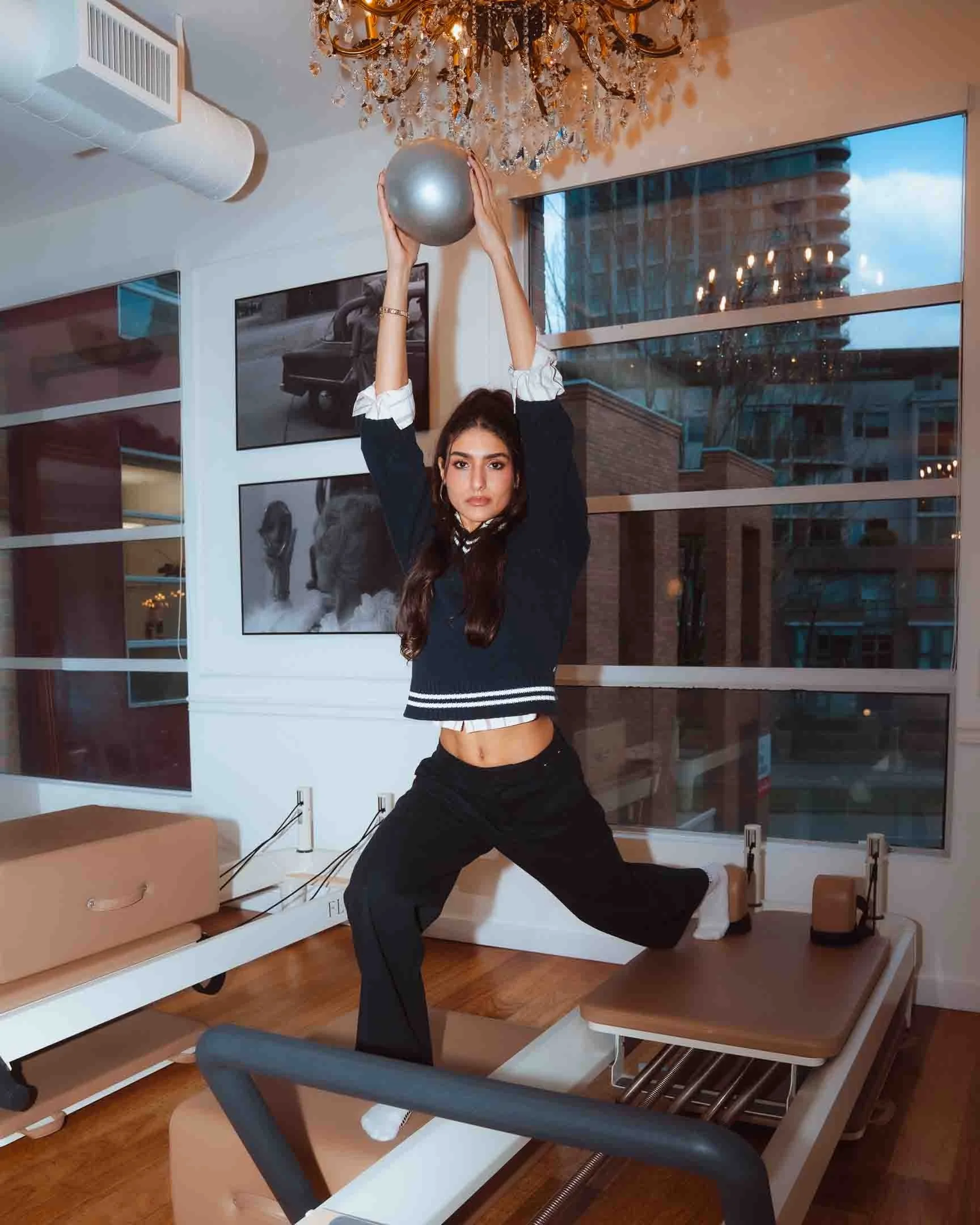
Shanya practicing controlled resistance through intentional movement, emphasizing alignment, stability, and strength from the core.
Pilates is often associated with flexibility and posture, but its approach to strength training is fundamentally different from what most people experience in a traditional gym setting.
Rather than focusing on heavy loads or isolated muscle groups, Pilates builds strength through controlled, intentional movement. Every exercise is designed to work the body as a connected system — emphasizing alignment, stability, and efficiency.
This is why Pilates strength looks and feels different. It’s not about pushing harder. It’s about moving better.
Strength That Starts at the Core
At the center of Pilates is core integration. Unlike workouts that target the core as a separate muscle group, Pilates treats it as the foundation for all movement.
Each exercise asks the body to stabilize from the center outward. This improves not only abdominal strength, but also spinal support, balance, and coordination. Over time, this creates strength that supports daily movement, athletic performance, and posture.
This is one of the reasons Pilates is often recommended for long-term joint health and injury prevention.
Curious how this feels in practice? Reformer Pilates makes this connection unmistakable.
Why Reformer Pilates Feels So Effective
Reformer Pilates uses spring-based resistance rather than weights. This type of resistance changes throughout the movement, requiring consistent control both as you push and as you return.
Because the resistance adapts, muscles are challenged through their full range of motion — not just at peak effort. This leads to more balanced strength development and greater muscular awareness.
It also means no momentum. Every movement is intentional. Every repetition counts.
This is why many people feel stronger after Pilates — without feeling depleted.
Small Muscles, Big Impact
One of the most overlooked benefits of Pilates is its ability to strengthen stabilizing muscles. These are the muscles that support joints, improve balance, and allow larger muscles to function efficiently.
Traditional workouts often bypass these areas. Pilates prioritizes them.
Over time, this leads to:
• Better posture
• Improved coordination
• Reduced muscle imbalances
• More resilient movement patterns
Strength becomes something you carry — not something you chase.
Breath as a Strength Tool
Breath is not an accessory in Pilates — it’s part of the work.
Coordinated breathing supports muscle engagement, enhances endurance, and encourages efficient movement. Instead of bracing through tension, Pilates teaches the body to generate strength while remaining controlled and fluid.
This approach creates strength that’s sustainable — not just performative.
Why Pilates Complements Other Training So Well
Pilates doesn’t replace strength training — it refines it.
Many people use Pilates to improve performance in weight training, running, or sport. By improving alignment, core control, and movement quality, Pilates helps the body move more efficiently under load.
The result: fewer compensations, better mechanics, and a stronger foundation overall.
Is Pilates Right for You?
Pilates is adaptable by design. Whether you’re new to movement or highly experienced, the practice meets you where you are — and progresses with intention.
Strength doesn’t have to be aggressive to be effective. Sometimes, the most powerful change happens through control, awareness, and consistency.
At FLOHAUS, our classes are designed to build this kind of strength — the kind that supports you beyond the studio.
